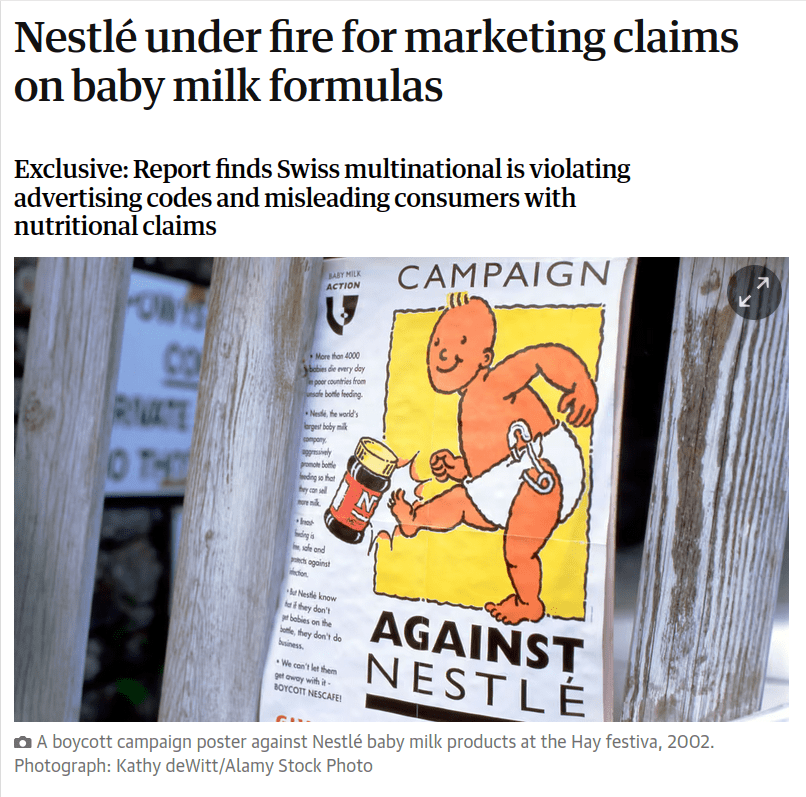
“Nestlé under fire for marketing claims on baby milk formulas,” February 1, 2018 Source: The Guardian
These days, many parents are hearing unsettling news: Nestlé has recalled batches of infant milk products across multiple countries due to quality and safety concerns. The announcement usually comes wrapped in calm corporate language: “out of an abundance of caution”; which is reassuring, until you remember that this is baby food we’re talking about. For families who rely on infant formula as a lifeline, such announcements are alarming. Nestlé is a household name, trusted by generations. Yet moments like these force parents to pause and ask an uncomfortable but necessary question: Are branded baby products always as safe as we believe them to be?
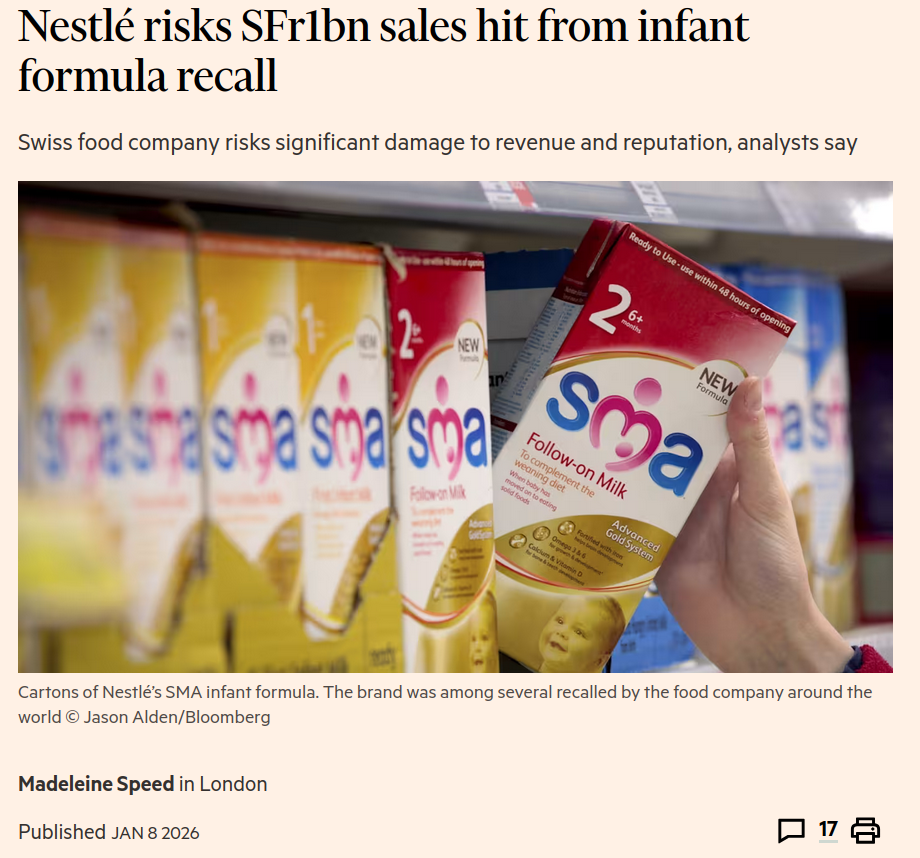
“Nestlé risks SFr1bn sales hit from infant formula recall” (January 8, 2026); Source: Financial Times — https://www.ft.com/content/9166deed-ad5c-4241-bfb2-8f5e20338b2d
This question is not new. Over the past several decades, some of the world’s most trusted baby and family brands have faced serious safety failures. These incidents were not rumors or internet panic, they were documented events, followed by recalls, investigations, lawsuits, or regulatory action. Looking at them together tells an important story about why brand recognition should never replace vigilance, especially when it comes to babies.
Let’s start with food, because nothing says “peace of mind” like feeding your baby. The Nestlé formula controversy itself has historical roots. In the 1970s and 1980s, Nestlé aggressively marketed infant formula in low-income countries, often discouraging breastfeeding. In places where access to clean water was limited, formula feeding led to widespread malnutrition and infant deaths. By 1981, the global backlash resulted in the World Health Organization introducing the International Code of Marketing of Breast-milk Substitutes. While this was not a product contamination case, it demonstrated how corporate practices, when unchecked, can have devastating consequences for infants.
Fast forward to modern times, and food-related concerns didn’t exactly retire. In February 2021, a U.S. Congressional report revealed that major baby food brands, including Gerber, sold products containing detectable levels of heavy metals such as arsenic, lead, cadmium, and mercury. Companies stated they met regulatory standards, which was comforting in the same way “technically legal” usually is. Then came February 2022, when Abbott Nutrition recalled Similac and other formulas following bacterial contamination concerns, triggering a months-long infant formula shortage. While the investigation focused on manufacturing and safety lapses, parents were left scrambling, reminding the world that industry concentration combined with safety failure can become a public health emergency..
Of course, if it’s not food, it’s sleep, or at least something marketed as helping babies sleep. In April 2019, Fisher-Price recalled its Rock ’n Play Sleeper after reports linked the product to more than 30 infant deaths. Parents were understandably shocked. The product had been sold for years by one of the most trusted names in toys. Apparently, the fine print forgot to mention that “inclined sleep” and “safe sleep” don’t really get along.
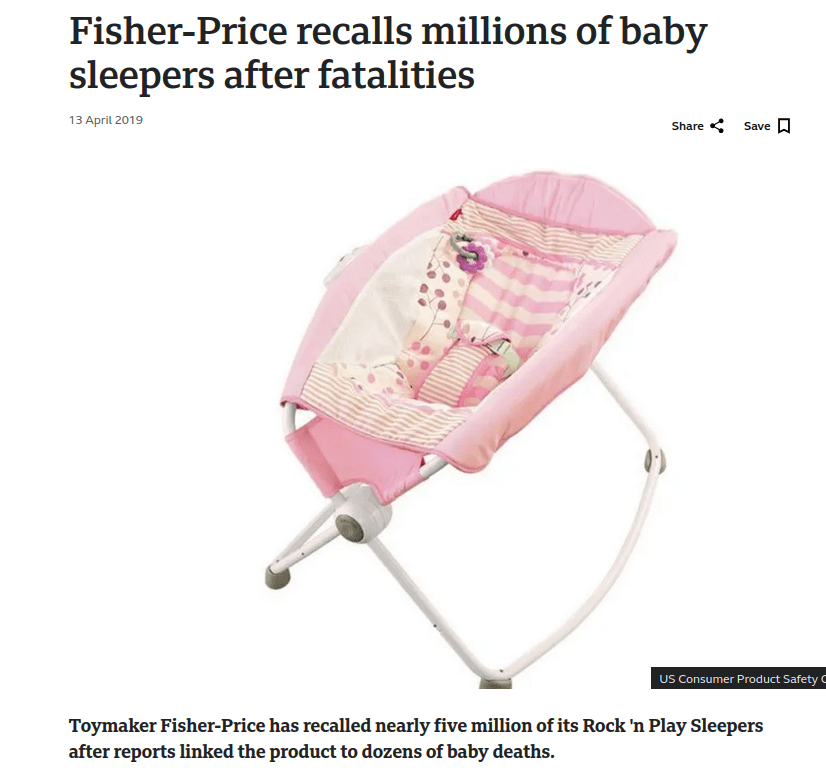
Fisher‑Price Rock ’n Play Sleeper recall after infant deaths linked to the product. Source: https://www.bbc.com/news/world-us-canada-47917782
Then there are the products that come with the promise of being “gentle,” “pure,” and “used by generations.” Johnson & Johnson’s talc-based baby powder fits that description perfectly. Yet by 2018 and 2019, lawsuits and investigations raised concerns about possible asbestos contamination. In May 2020, the company discontinued talc-based baby powder sales in the U.S. and Canada. Turns out, tradition doesn’t automatically equal safety, it just means we’ve been doing something the same way for a very long time.
Even the everyday essentials haven’t escaped their moment. Huggies recalled certain baby wipes in 2018 due to bacterial contamination concerns. Graco, a household name for car seats and strollers, has issued multiple recalls over the years, including notable ones in 2014 and 2016 related to buckle and latch issues that could trap or injure children. Chicco recalled car seats in 2014 after discovering that improper installation instructions could increase injury risk. None of these brands are obscure. They’re the ones parents proudly list when asked, “What brand did you go with?”
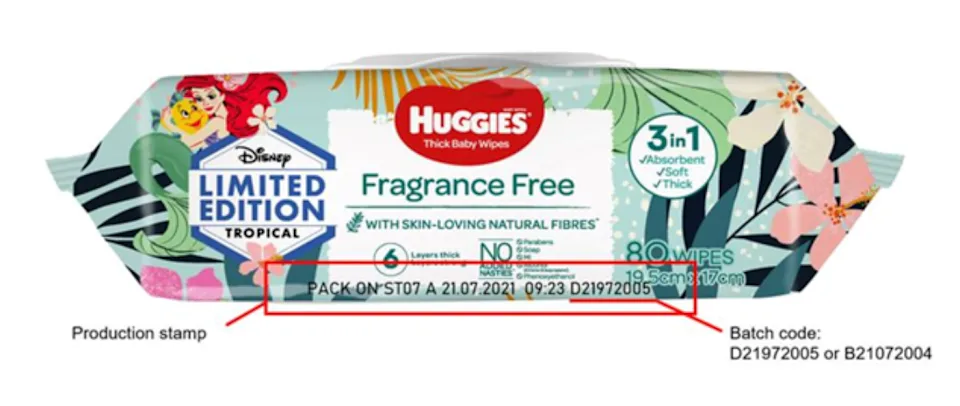
Huggies Thick Baby Wipes, part of a recall after bacteria found in two batches (9News reporting, December 24, 2021): Source: 9News / Australian recall notice (Dec 2021)
And let’s not forget the modern twist: science catching up with marketing. In 2020, studies revealed that some BPA-free plastic baby bottles—including popular brands like Philips Avent—released microplastics when heated. So yes, the bottle was BPA-free. It just quietly introduced a brand-new concern instead.
What’s striking in all these cases isn’t intentional harm. It’s delay. Problems were identified, but recalls often came after products were widely used. Transparency arrived after investigations. Reassurance followed public pressure. The system didn’t collapse, but it didn’t exactly sprint either.
For parents, the takeaway is not fear, nor rejection of all branded products. It is awareness. Branding creates comfort, but safety comes from staying informed, reading recall notices, questioning materials and design, and following independent medical guidance rather than marketing language.
Big brands remain an important part of modern parenting. But trust should be informed, not automatic. When it comes to babies, a familiar logo should never be the final measure of safety.
 Felice Bambino
Leave a comment