My Journey into Motherhood
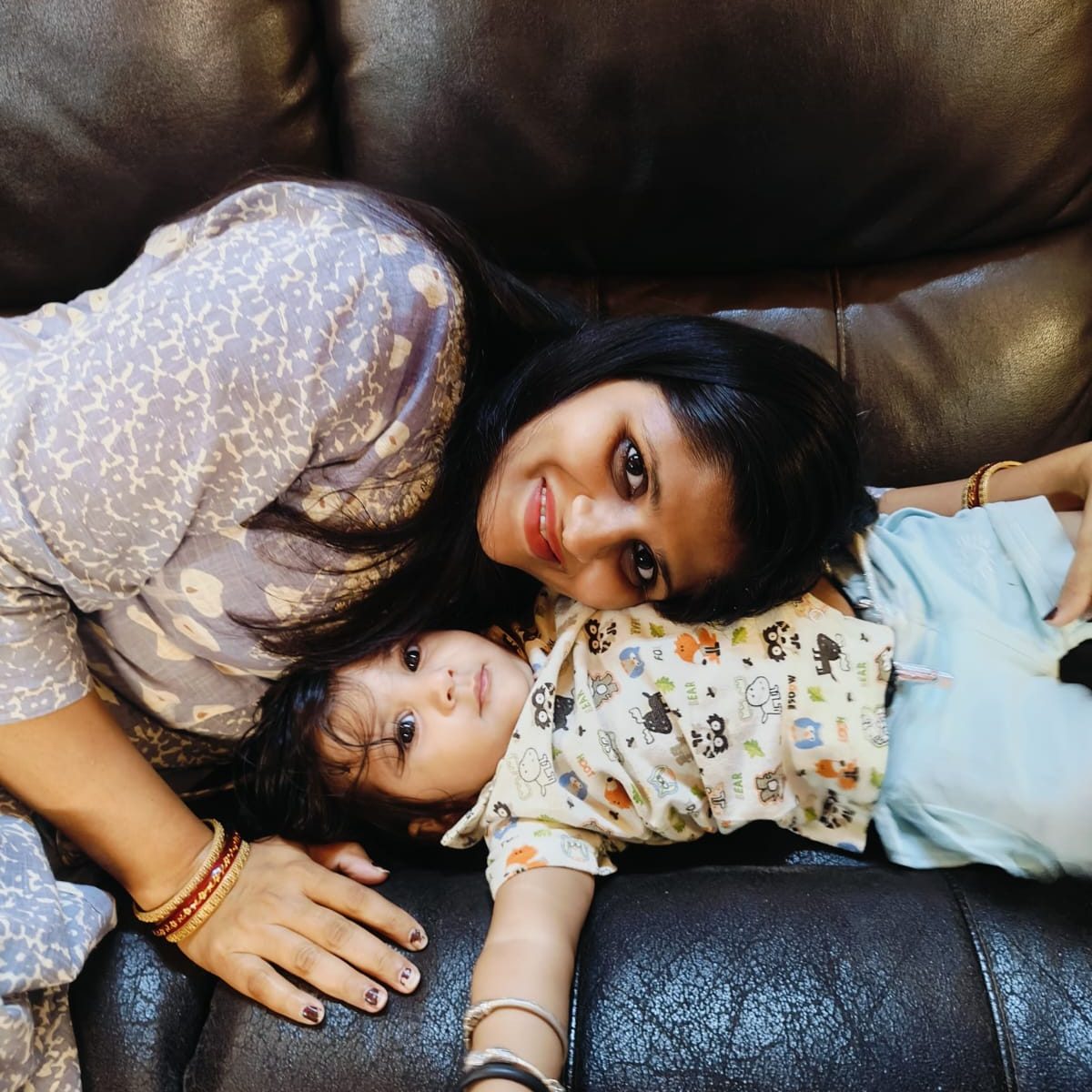
On 24 November 2024, I became a mother at the age of 34. Motherhood was never something I actively planned for, but during my pregnancy, I found myself growing more attached to the little life inside me. I secretly hoped for a daughter, and when she arrived, my heart felt complete in a way I hadn’t expected.
Her birth, however, was not easy. After a normal delivery, I lost consciousness within a minute. I saw her only for a moment before everything went blank. I woke up almost 12 hours later and only then learned that I had given birth to a baby girl. In that time, my family took care of everything—something I still deeply appreciate.
Physically, recovery was challenging because of the stitches. The biggest struggle came with breastfeeding. Since I was unconscious, nurses fed her formula, and when I tried to breastfeed later, she couldn’t latch due to my inverted nipples. I tried manual expression, nipple shields, and even an electric pump, but my milk was never enough. Eventually, she shifted almost fully to formula. Following family advice, we also introduced diluted goat milk for a couple of months, which she tolerated well. Later, we moved to cow milk and then Amul tetra packs during travel.
Today, she is one year old, healthy, active, and learning new words every day. She has started walking with support and brings a lot of joy to our home. I am now pregnant again. I didn’t want to wait too long because of my age, and my doctor agreed it was a reasonable decision since my first delivery was normal and I was no longer breastfeeding.
Motherhood wasn’t something I dreamed of, but it has become a meaningful and unexpectedly fulfilling part of my life.
Chitra Shukla, India
Mother of a one year baby girl
The Grace of “Jeux sans frontières”
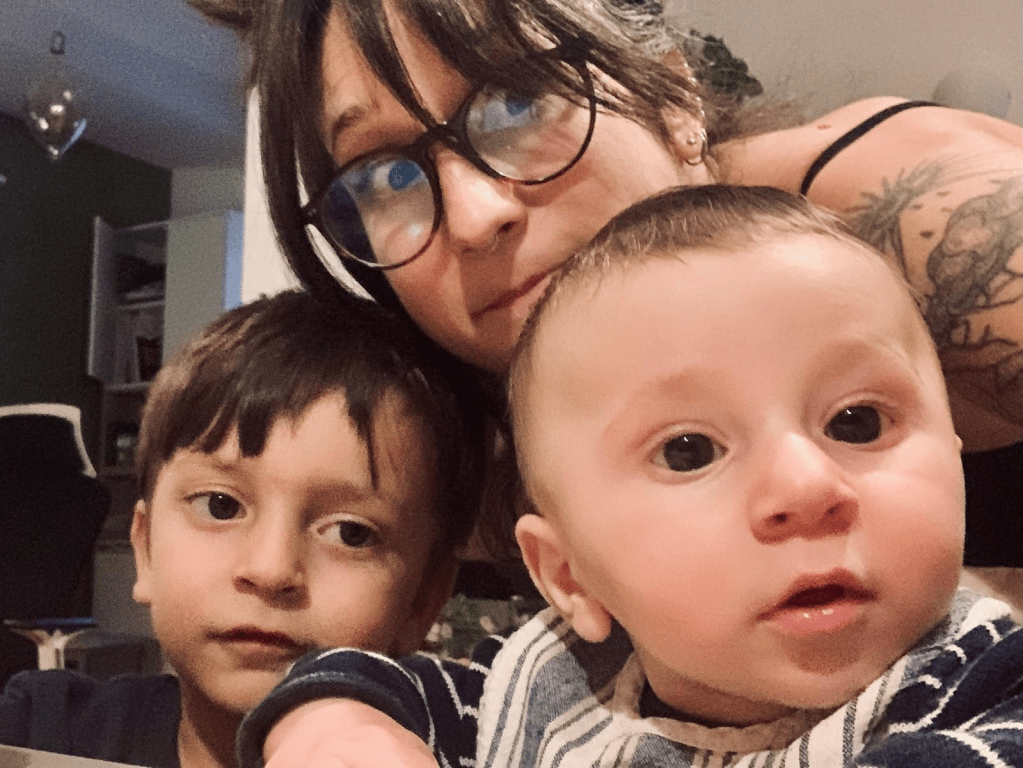
On warm summer evenings in the 1990s, as a child, I loved watching “Jeux sans frontières” (Games without borders), an international show where teams from different European countries competed in physical challenges and solved Europe-themed quizzes. It was almost like an Olympics, with a series of para-sport competitions held in gigantic, ever more spectacular and imaginative sets built anew each time. To face those funny and daring challenges, a certain level of physical, if not athletic, preparation was essential. Never would have I imagined, back then, that twenty-five years later, the “ever more spectacular and imaginative” challenges of that show would so precisely describe the experience of motherhood.
I’m writing down these thoughts in one of the rare moments of “blissed solitude”, while my children (three and a half years old, and six months old) are at school and I am still on maternity leave. And I don’t want to use this moment to dwell on the difficulties: the constant tiredness, the dark circles that are part of every outfit, the stains from various and often mysterious liquids that decor my clothes, or the collection of acorns, leaves, feathers, and toy cars I always carry in my bag just in case. Nor do I intend to delve into the inadequacy of support measures for parents and mothers, or the complexity of organizing one’s own life, a couple’s life, and that of two little people, without a proper support network. All of this, after all, is part of those quirky challenges from “Jeux sans frontières”.
I won’t even venture into the emotional complexity of balancing your own body, hormones, the supplements you always forget to take, the children’s emotional crises, in which you, as an adult, should and would like to be a beacon of calm (yes, exactly). Not to mention the sometimes annoyed or aggressive talk to your partner, and all the consequences that follow. All real, all complicated, all incredibly present every day.
What I really want to focus on, though, is something else: sometimes—rarely, or maybe more often—it happens that, as if by magic, the noise stops, everything falls into place, and time finally seems to turn in your favor. In those brief moments, you feel that yes, you’re making it. It’s a short, inebriating moment, almost superheroic. It doesn’t happen often and doesn’t last long: a nap interrupted or a cookie offered broken instead of whole is enough to break the spell. Yet, when it happens, you feel full: full of strength, ability, life. Full of love, luck, and competence.
These moments are unpredictable and hidden, to be sought out and collected like rare Pokémons. But precisely for this reason, it’s important to try to burn them in your mind and, above all, in your heart, because they are the fuel that powers everything else. Fuel for energy and deepest meaning. Every day we have the chance to open ourselves to the grace, which for an instant reveals who we are—or rather, who we can be—with ourselves and our children, and how happy, united, and fulfilled we can feel. We don’t always succeed, but knowing that it’s possible gives meaning to keeping on trying.
Perhaps this is my favorite lesson (for now) of being a mom: to change, to listen, to let go, to work the hardest (“just”) to enjoy that brief moment of wonder. Unbelievable.
Now I have to run to daycare: I’m late, and more acrobatic feats await me before the end of the day.
Francesca Palmieri, Italy
Mother of a two tiny Tornadoes
Being Pregnant in Denmark
My experience being pregnant in Denmark has been excellent. The system is very clear and well-structured, with specific guidelines and processes that are explained step by step. Even without speaking Danish, I always felt supported—everyone speaks great English, so communication was never an issue.
What I especially appreciated was the strong focus on midwives. They are highly trained specialists, and you really feel that they are dedicated to pregnancy and birth. You’re not relying only on a general practitioner, but on people who truly understand this specific field, which made me feel very well cared for.
The only downside for me was being far from family. After the birth—when things can be tough and you’re exhausted—you really notice the absence of a support network. Having even one family member close by to stop in from time to time would have made those early weeks a little easier.
Oumaima Dalil, Germany
Mother of 4 months little boy

How Motherhood Changes Everything
Becoming a mother shifted my entire world into a new rhythm. It feels as if I am growing alongside my child—discovering myself again, learning the things I once lacked, and gently fixing the parts of me that motherhood brings to the surface. Every beautiful moment with my baby—the first smile, the first steps, the way they relax in my arms—fills me with a kind of energy that no amount of exhaustion can outweigh.
Of course, there are challenges too. Teaching a child to manage their emotions often starts with learning to manage my own. Motherhood constantly reminds me that being strong doesn’t mean ignoring emotions—it means understanding them. And there are days when, without even realizing it, I crave just a few quiet minutes for myself. Not long breaks, just small pauses to breathe. But even those moments make me appreciate the journey more, because motherhood is something I grow through as much as my child does.
It’s a path full of difficulties and miracles at the same time… yet every moment makes life feel richer and more meaningful.
Fidan, Azerbaijan
Mother to a beautiful toddler

Breaking the Generational Cycle
There is this thinking that I grew up with that you are only a good mom if you love your child from the first moment you realize you are pregnant. That didn’t happen to me and I was too scared of admitting that. I felt like life and pregnancy were moving past me while I was trying to act the part. I felt that if I share my real feelings, I will be shamed. So I hid it as long as I could. Halfway through the pregnancy I had to reduce my working hours due to high blood pressure derived from stress and at week 36 I completely broke. This was the time that I was assessed for depression.
I started therapy and realized that I had a lot of childhood trauma that is normalized in my country. I was trying to work through it before my daughter arrives but I failed at it. Many midwives told me that not everyone loves their child from the moment they are born. I didn’t. Even though we had family visiting, I was alone, unsupported, and sometimes even shamed for my depression.
When my daughter was 9 weeks old, I had another depression assessment where it was decided that I need anti-depressants to help me work through things. The shame and guilt grew terribly and I kept thinking what will people think at home?
Although it took a while, I am getting better. There are ups and downs, but generally there is improvement. During this time, there are a lot of things I learned:
- My psychiatrist pointed out, that even animal mothers need to learn how to take care of their offspring. So why is it that we expect new moms to have it all figured out? It’s a skill like any other and it takes practice.
- Not loving your baby from the moment they are born is okay. They are a new person and you need to get to know each other.
- There are moms who enjoy the newborn stage. There are moms who enjoy the later stages. And there are moms who enjoy it all or none. They are all good moms.
- It’s okay to want your “you time” back. You don’t just stop existing when becoming a mom
- People invent aids for parents for a reason. In today’s word we don’t have a village to help us raise kids, buy we have inventions. They are not replacing the mom, they are substituting the village.
- Asking for help doesn’t make you a bad mom, it makes you a great one because you are trying.
- Bad days happen to all moms, and social media doesn’t show those. You are seeing someone’s one minute in 24 hours, not their whole life.
And last, but not least: If your baby is alive, you are doing great.
I heard that a woman gets a daughter if she needs to self reflect or learn something. Ultimately, I am happy my daughter is in my life and helps me leave all the terrible expectations and stigmas of my home country in the past.
Name withheld by request, Hungry
Mummy of a 5 months old baby girl
Adjusting to Motherhood
My first pregnancy was a mix of excitement and nervousness, with everything feeling new and a little overwhelming. Both of us spent a lot of time reading and preparing, hoping to make the journey smoother. Along the way, I experienced many psychological and emotional changes that I hadn’t fully expected. We were fortunate to find a very good doctor who guided us at every step, and for most of the journey it was just me and my husband supporting each other right up until the time of delivery.
After the baby arrived, life shifted completely. The routine changed overnight, and I found myself struggling with a depression-like phase as I tried to adjust to the new responsibilities. Moving to my parents’ home for the next nine months was a good decision, having them around brought comfort, stability, and the emotional support I truly needed. With their help, we could focus on caring for the baby, from feeding to vaccinations to sleepless nights, while slowly finding our own balance again.
Ruchita Shrivastava, India
Mother of a two year baby girl
Healing Far From Home
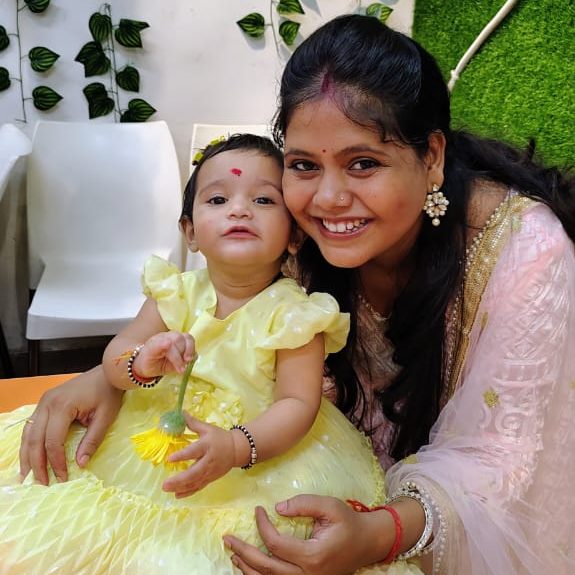
The most difficult moments were the newborn trenches. I was struggling a lot to function as a human after having the c section done but also have a small baby crying all the time. Sore engorged breasts and baby not sleeping at night, my husband always took over the sleepless nights but it took a toll to try to sleep in the bedroom while listening to my baby scream in the other room. And constant dilemma if i should sacrifice my sleep just to feed baby because of pain in my breasts 🥲 or those days where I was so hopeless crying in the bathroom, because no matter what i did the baby kept on crying and crying relentlessly without any success of calming him down. These days really done a lot of damage to an extent where I don’t think if id ever handle mentally having another baby or want to go through all of this experience again.
Name withheld by request, Lithuania
Mother of a little boy
Parenting Across Borders
Most difficult part in being an international couple with absolutely no family of childhood friends here (foreign country), is that you have no back-bone. You have to build everything yourself: knowledge of how the system works, what is right way of doing things (not even culturally, but also paperwork), have to build up network for yourself as a new parent, and for the child as a growing and developing human being, also figure out about activities at hand – it’s not so intuitive to know of all ‘gratis’ options a child has and all local activities- those you have to look (søge) deeper and learn from the network you created.
And this is all separate from the fact that you’re on your own! Any good day, any bad day – you are just having to suck it up and deal with it hoping for a better day tomorrow.
You have to count on people you create network with and to the hired help.
But there’s nobody to just jump and say – let me help you here for this evening, etc.
In addition to ‘being alone’ , unfortunately, also kids are alone in the sense that their blood-relatives are elsewhere- we will not be able to build this sense of cousins, aunties, uncles who come random occasions and just are around for whatever, even if it’s help for father to change tires on the car.
It’s just a different world for them , than what I had in my growing years.
It all somehow leans on the network..
THE NETWORK YOU CREATE
And it does not come always very naturally, as an international family, you have to put effort.. 🫶
It would require anyways, but being trusted amongst Danes is still a thing ⭐️
So, network is the key to everything: general knowledge, information about customs, relationships, support, free-time activities
Roberta Pirrone, Lithuania
Chaos Coordinator-in-Chief to Three Kids

Challenges for new mothers in Iran
Life for a woman changes significantly after having a baby in Iran. Usually, family members play a big role in supporting the mother. However, if you are in a different city and away from your family, you might feel isolated. In such situations, hiring a caregiver can be an option. Additionally, fathers often face challenges due to work commitments and may not be able to provide as much support as needed.
Moreover, if a mother is employed, she might face the risk of losing her job, or if she works in a government position, the maternity leave might not be sufficient for her to return to work without worry. There are few workplaces that provide on-site childcare, and even when available, there may be concerns about the reliability of the staff. This separation between mother and child can have irreparable effects on both, including separation anxiety for the child.
Farida, Iran
A woman who wants to be a mother one day
Unlocked Love, Invisible Weight
Becoming a mother to my baby boy wasn’t just an addition to my life—it was a complete shift of identity. The person I was before didn’t disappear, but she was rearranged, stretched, and reshaped around a tiny human who suddenly became the center of everything. Life didn’t simply change pace; it changed ownership. My time, my thoughts, my body, and my heart were no longer just mine.
The beginning was especially hard. After losing three liters of blood during birth, my body was trying to recover from something traumatic while my heart was learning how to mother. I was healing, depleted, and expected to show up anyway. There is something deeply challenging about being physically fragile while caring for someone so completely dependent on you. It was a reminder that birth is not just beautiful—it can be brutal, and women are incredibly strong for surviving it.
The love surprised me the most. I had known love before, but this was something deeper—almost primal—an unlocked level I didn’t know existed. It’s fierce, consuming, protective, and tender all at once. With that love came fear: the weight of responsibility, and the constant, quiet question running in the background of everything—am I doing enough, am I doing this right, is this good enough?
Alongside the physical and emotional recovery came the mental load. The invisible work of motherhood. The remembering, planning, anticipating, and holding of everything—feeds, naps, appointments, milestones, safety, emotional well-being. Your mind is never truly at rest. Even when your body pauses, your thoughts keep running, managing a life that now depends on you. This constant mental vigilance is exhausting, and it’s rarely seen or acknowledged.
Motherhood demands an emotional awareness that is both beautiful and draining. You are always “on”—reading cues, regulating your emotions while helping someone else learn theirs. There is no off-switch. Even in moments of rest, part of you remains alert, listening, ready.
And yet, women do this every day. They create life, carry it, birth it, and then continue giving—physically, emotionally, mentally—often without enough recognition. Mothers should be valued and praised far more for this invisible, relentless labor. The strength it takes to show up, to love this deeply, to carry the mental load while questioning yourself constantly, is extraordinary.
Motherhood can feel like your life has been taken over—but within that takeover is something profoundly meaningful. You are becoming someone new while keeping another human alive. If you’re wondering whether you’re good enough, know this: the very fact that you’re asking means you care deeply. And that care, that love, is already everything your baby needs.
Maida, Bosnia
A mother of a beautiful boy
Giving Birth Between Two Countries
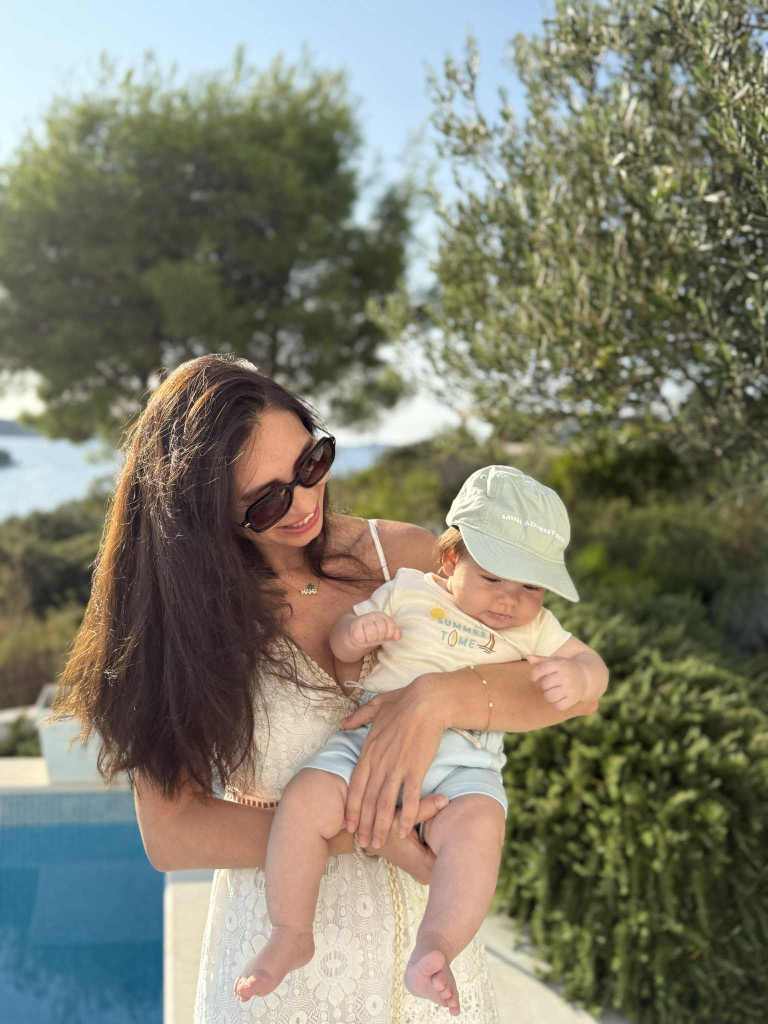
I discovered I was pregnant and my due date was the 10th of June. At the same time, my sister was getting married less than a month later. During pregnancy I felt very lucky: I was active, going to the gym, travelling, and I didn’t experience any major symptoms or discomfort.
At some point, I had to make an important decision: whether to give birth in Denmark, where I live and have my own home and comforts, or to go back to Italy. Giving birth in Italy would allow me to be present for my sister’s wedding, and also gave my parents the opportunity to be present during this important moment in my life but it also meant staying at my parents’ house, without my usual routines and independence.
In the end, I decided to give birth in Italy.
I returned a couple of weeks before my due date—the last possible week I was allowed to fly—and stayed with my family. I went through a few medical checks to make sure all my documentation was updated and available in Italian as well.
When I was 40 weeks and 3 days pregnant, a close friend of mine, who is also a gynecologist, suggested that I go to the hospital for a check-up. In Italy, after 40+4 weeks, if the hospital has availability, they usually admit you for monitoring and consider induction rather than waiting too long.
They tried different induction methods, starting with milder protocols, such as a balloon catheter to help shorten the cervix, followed by pills administered every four hours. I felt very lucky because there were many midwives and doctors available to explain every step, monitor both me and the baby, and answer my questions. Eventually, I was induced with oxytocin.
The doctor told me it was time to move to the delivery room, so I called my husband and told him, “This is the moment.” It was 8 in the morning, and our baby was born at 9 in the evening.
My sister stayed with me the entire time, supporting and helping me through every phase. I asked for anesthesia, but unfortunately, I never received it, so I felt every single contraction. The midwife was amazing and helped me change positions and move in ways that supported labor, but the pain was unimaginable. I consider myself someone who can tolerate pain quite well without complaining, but this kind of pain is so deep and overwhelming that it’s impossible not to react.
I focused on breathing and changing positions. Eventually, they told me it was time to change position again—this time standing on a chair and pushing. There was a rope attached to the ceiling that I could hold onto, which was incredibly helpful during pushing.
The final stage felt like burning—that sensation is the strongest memory I have from the last part of labor. Then suddenly, they placed my baby on my chest. His skin, his smell—everything felt soft, warm, and full of life.
After the birth, since it was very late, they allowed me to rest after two hours of monitoring to ensure everything had gone well. They delivered the placenta and stitched me, as my baby had come out with one hand close to his face.
I spent the following three days in the hospital with my baby. He was monitored closely and underwent a few routine tests, while I spent my days co-sleeping with him and holding him close. For about two hours each day, we received visitors—both my family and my husband’s family.
After that, I moved to my mother’s house with the baby. There, I started receiving many visitors at home as well, which made it difficult to rest or sleep during the day. The baby woke up every two hours to feed, and I stayed awake during every feeding. He absolutely hated the stroller, so he slept only on me. During the first few nights, I was so scared that I barely moved or slept, afraid of doing something wrong.
Motherhood is tough. You don’t sleep much, you try to do your best, and often people feel entitled to tell you how to do things instead of respecting your time and your decisions.
My husband has been very present from the very beginning and has helped me in every possible way. Even though partners can never fully experience the physical and emotional load of motherhood, having a supportive and involved partner makes an enormous difference.
Vittoria D’Acierno
Mamma of a beautiful 6 months boy

 Felice Bambino